Artificial Intelligence is transforming how businesses manage tasks, automate operations, and improve productivity. Two important concepts in this transformation are AI Agents and Workflows. Although both help businesses automate processes, they work differently and serve different purposes.
At Soulogix, we help businesses explore intelligent technology solutions that simplify operations, connect processes, and create smarter digital experiences. Understanding the difference between AI agents and workflows is the first step toward building effective business automation.
What Are AI Agents?
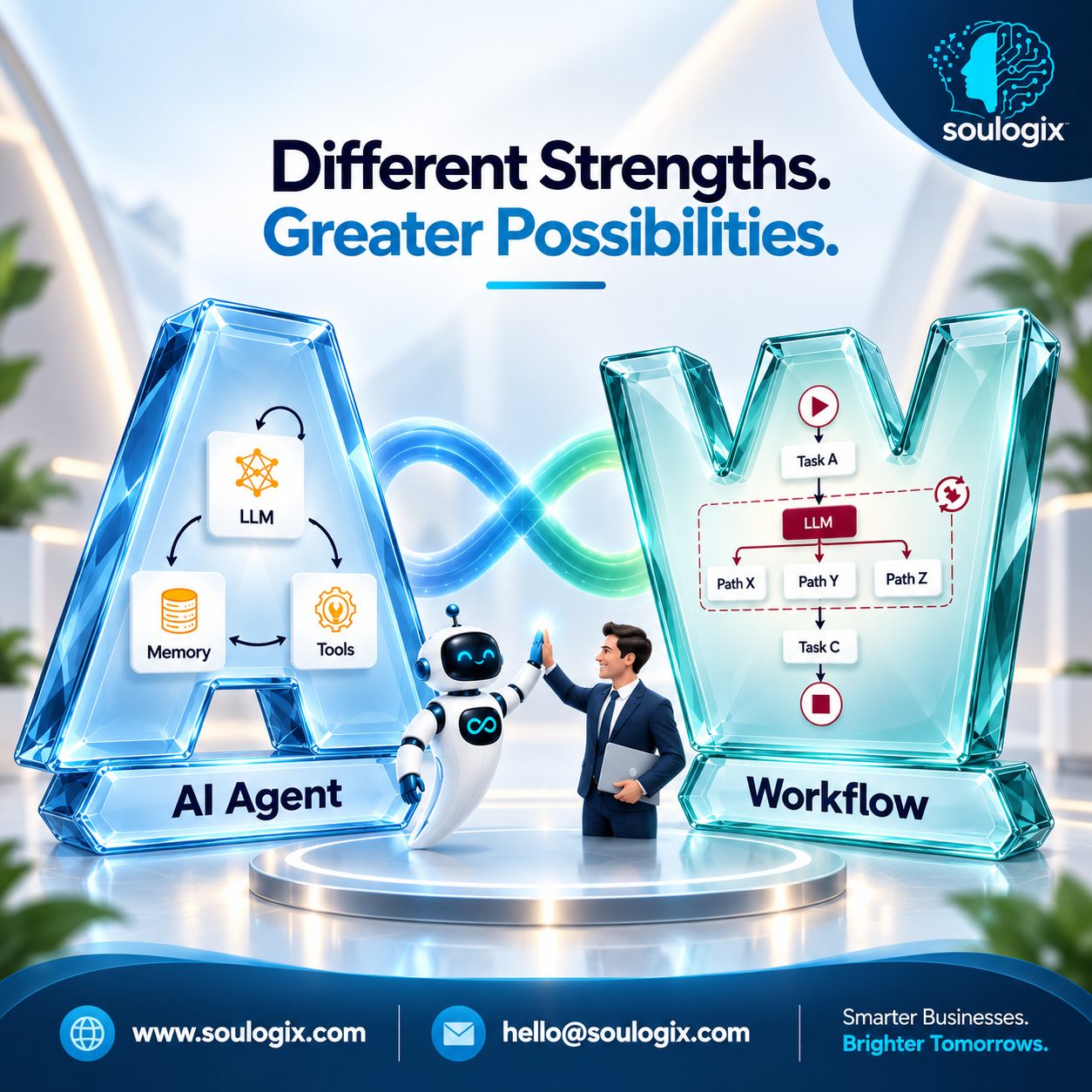
AI agents are intelligent systems that can understand situations, make decisions, and take actions based on their objectives. They use AI to interpret information, respond to changing conditions, and determine the next steps required to complete a task.
Think of an AI agent as a chef who can prepare a meal using whatever ingredients are available. Instead of following a fixed recipe, the chef evaluates the available ingredients, adapts to unexpected situations, and decides how to achieve the desired result.
In business, AI agents can help answer customer queries, qualify sales leads, analyze information, and coordinate tasks across different systems.
What Are Workflows?
Workflows follow a predefined sequence of tasks. Each step is designed to happen in a specific order, making workflows ideal for repetitive and predictable business processes.
Think of a workflow as a recipe. You follow the instructions step by step to achieve a consistent result.
For example, a loan approval workflow might involve receiving an application, verifying documents, checking eligibility, and sending an approval or rejection notification.
Workflows are particularly useful when businesses need consistency, control, and predictable outcomes.
How Are AI Agents and Workflows Different?
1. Autonomy and Decision-Making
AI agents can evaluate information and choose actions based on the situation and their objectives. Workflows generally follow predefined rules and execute predetermined steps.
2. Flexibility and Use Cases
AI agents are useful for dynamic tasks where customer needs, available information, or circumstances may change. Workflows are better suited to structured activities such as invoice processing, employee onboarding, and routine approvals.
3. Complexity and Implementation
Workflows can be relatively straightforward to design when processes are clearly defined. AI agents may require more planning, integration, testing, and monitoring because their decisions can vary depending on the context.
4. Controversies and Misconceptions
AI agents are not completely independent or always correct. They can make mistakes and require appropriate permissions, safeguards, and human oversight. Similarly, workflows are not necessarily rigid; they can include conditional rules and adapt to different scenarios within their design.
Can AI Agents and Workflows Work Together?
Absolutely! Combining both approaches can deliver powerful results. A workflow can manage the overall process, while AI agents handle tasks that require interpretation