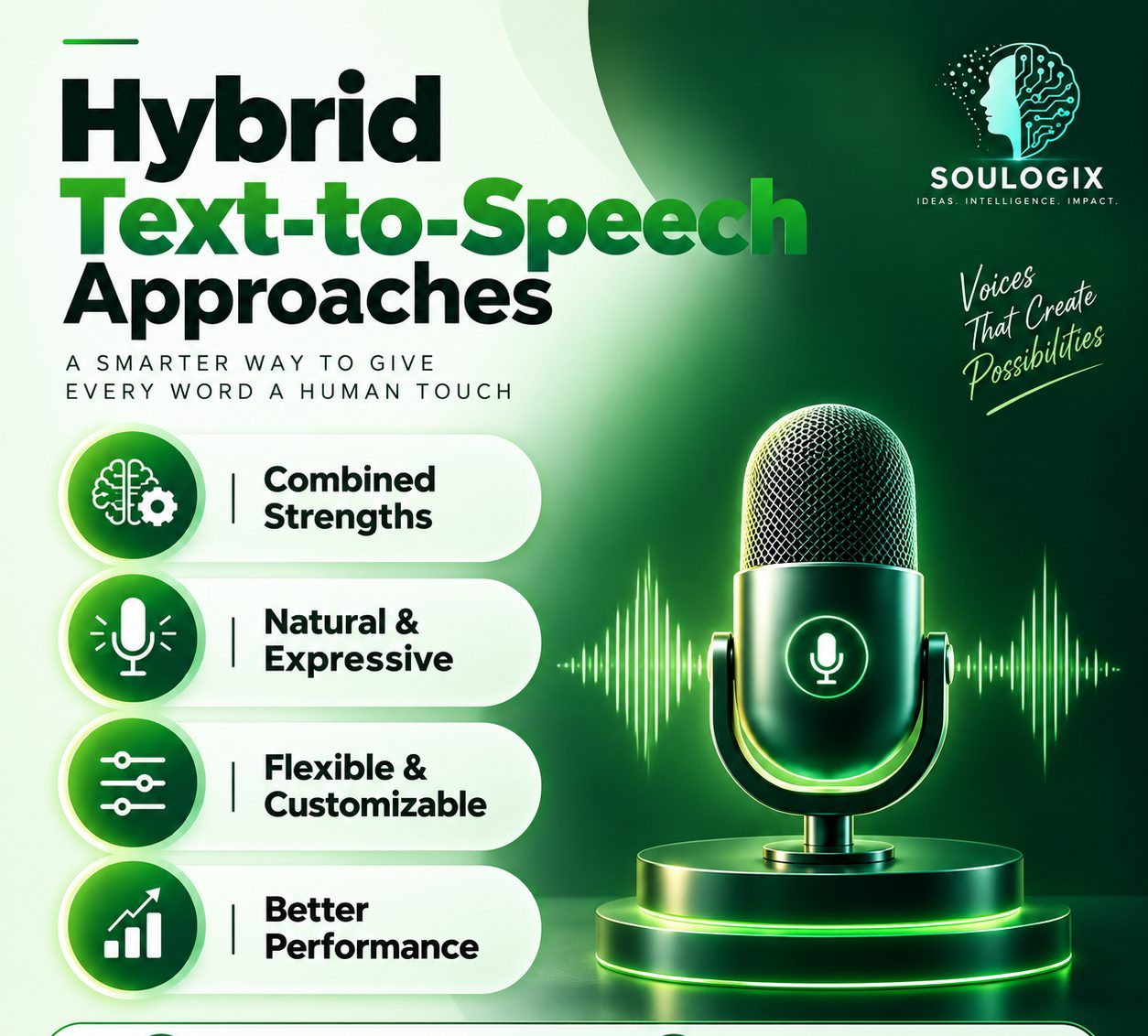
Hybrid Text-to-Speech (TTS):
In today's fast-paced digital world, businesses need communication solutions that are fast, reliable, and engaging. Hybrid Text-to-Speech (TTS) combines cloud-based and on-device speech technologies to deliver a smarter, more flexible voice experience. By bringing together the strengths of both approaches, businesses can improve voice quality, response speed, cost efficiency, and reliability.
What Is Hybrid Text-to-Speech?
Hybrid TTS is a technology approach that combines cloud-based speech generation with local, on-device speech processing. Instead of relying entirely on one system, it selects the most suitable option based on the application's needs, internet connectivity, and required voice quality.
For example, a mobile application can use on-device TTS to read simple notifications or short messages instantly. When a task requires a more natural, expressive, or sophisticated voice, the application can use cloud TTS to generate higher-quality speech.
This flexible approach helps businesses deliver effective voice experiences across different devices, applications, and operating environments.
How Does Hybrid TTS Work?
A typical Hybrid TTS workflow follows these steps:
1. Input Text: The application receives the text that needs to be converted into speech.
2. Analyze the Request: The system evaluates the content, voice quality requirements, network availability, and processing needs.
3. Select the Appropriate Engine: Simple and frequently used responses can be processed locally, while requests requiring advanced voice capabilities can be directed to the cloud.
4. Generate Speech: The selected TTS engine converts the text into audio.
5. Deliver the Voice Output: The generated speech is played through the user's device or application.
6. Offline Fallback: When internet connectivity is unavailable, supported requests can be processed locally, provided the required speech engine and voice resources are available.
Key Benefits of Hybrid TTS
- Better Voice Quality: Use advanced cloud voices for natural, expressive speech when needed.
- Faster Response Times: Generate simple speech locally to reduce network-related delays.
- Lower Operating Costs: Reduce unnecessary cloud requests by handling suitable tasks on-device.
- Offline Reliability: Maintain essential speech functionality even without an internet connection.
- Flexible Performance: Choose the right processing method for different business requirements.
- Improved User Experience: Deliver convenient, responsive, and accessible voice interactions.
Why Choose Hybrid TTS for Your Business?
Hybrid TTS is valuable for mobile applications, customer support platforms, virtual assistants, accessibility solutions, and enterprise automation. It allows businesses to balance performance, voice quality, connectivity, and cost without depending exclusively on cloud infrastructure or local device capabilities.
At Soulogix Technologies, we help businesses explore intelligent technology solutions that align with their workflows and customer expectations. By combining cloud capabilities with on-device processing, organizations can create flexible speech experiences that support productivity and digital transformation.
Ready to make your business communication smarter with Hybrid TTS?
Visit www.soulogix.com to discover technology solutions designed around your business needs.